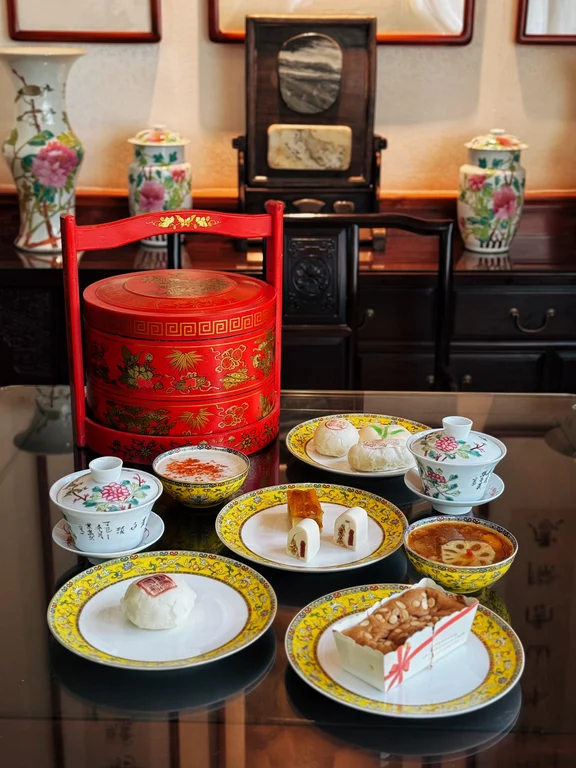
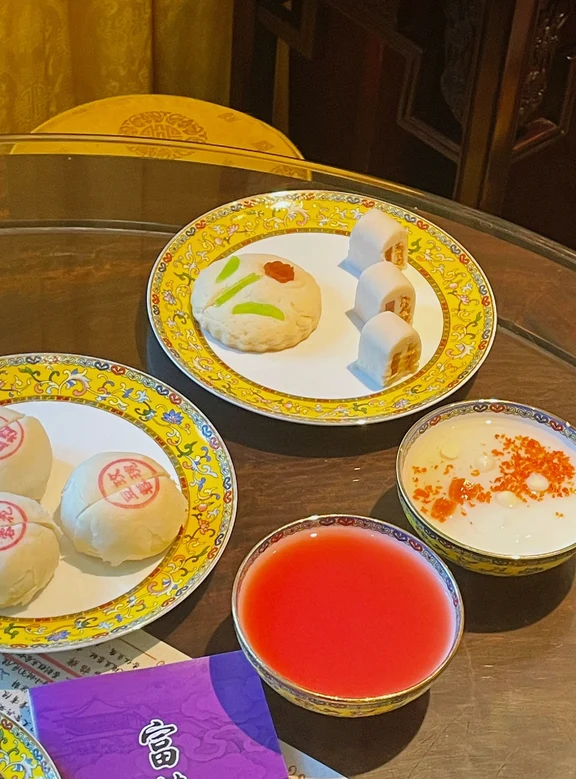
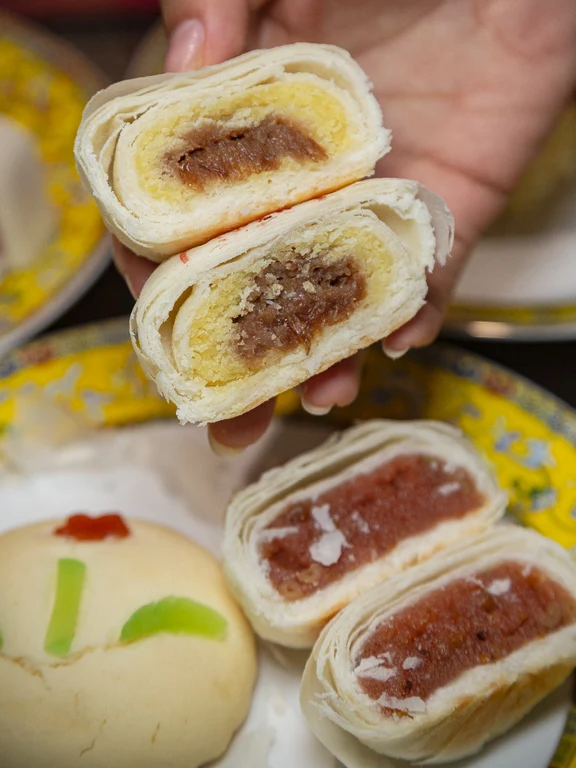
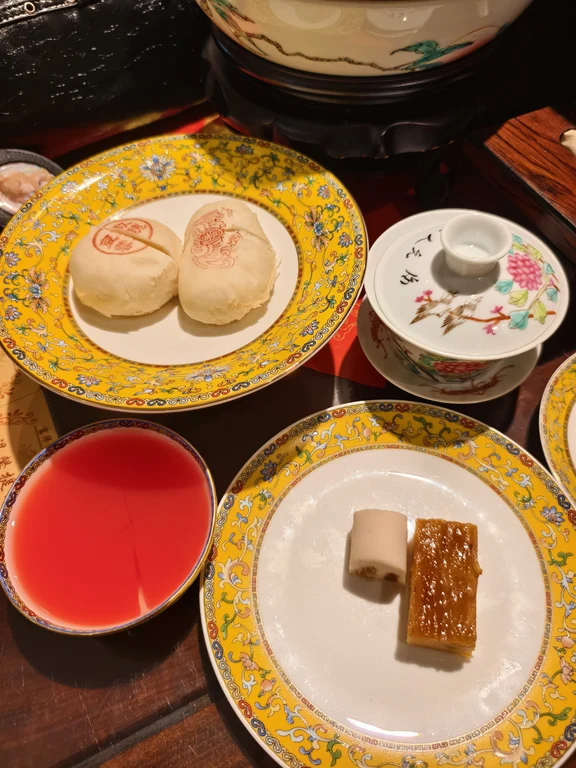
Fuhuazhai is a Chinese pastry shop working in the old imperial kitchen tradition by hand. Descendants of palace cooks revived a number of palace pastries that had nearly disappeared. It joined the Beijing old-brand list in 2022, and many diners call it the ceiling of Beijing pastry.
Where it comes from
- The lineage
- The craft comes from Wang Xifu, a cook in the Qing imperial kitchen. Everything follows the old hand method, and the shop has brought back palace pastries including suni'efen white cake, ganglu and rose crisp.
- Recognition
- In 2022 it was added to the seventh batch of Beijing old brands, and its pastry cook Chen Liumei was named among the craftspeople of those brands.
- Where
- The shops are in Beijing only. The main one is at 85 Huguosi Dajie in Xicheng, in Huguo Xintiandi; there are branches at the Drum Tower and in Sanlitun.
What to order
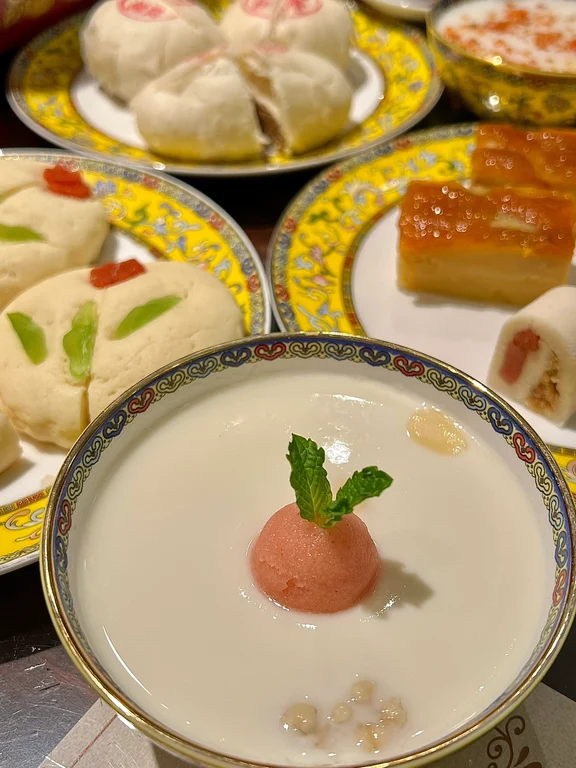
- Suni'efen white cake
- The signature. The Manchu name means milk: a white cake base with flower-shaped dried fruit, soft and milky rather than sweet.
- Rose and bean paste crisp
- Layered pastry that sheds crumbs, filled with mung bean paste and rose jam from Miaofengshan. The rose is delicate, and it arrives still warm.
- Kidney bean roll
- Kidney bean paste wrapped around hawthorn and sesame sugar. The paste is fine, the sweet and sour alternate, and it melts in the mouth.
- Almond jelly
- Strong almond aroma, clean and not heavy, with sugared osmanthus on top. Served cold and slippery.
- Watermelon jelly
- Summer only, June to August. The watermelon tastes natural and fresh and still has some body to it — the best thing here in the heat.
- Milk and fruit ice
- Rich milk with a faint fermented-rice note, served very cold; popular in summer.
What it costs
- Per piece
- About 8 to 16 yuan each. The more expensive ones, the rose crisp among them, are around 19.
- Per person
- A few pastries with a pot of tea comes to roughly twenty or thirty yuan each; four people can eat for under a hundred.
- Value
- Cheaper than a slice of Western cake, dearer than loose Chinese pastries from a counter — the difference is the hand work and the ingredients.
The room
- Palace-style interior
- Bright yellow hangings, square tables, day beds, calligraphy on the walls and Beijing drum ballad playing on a loop. It reads as a step out of time.
- Open kitchen
- You can watch the pastries being made by hand on the ground floor; upstairs is a quieter, more formal room.
- Service
- Lemon water arrives when you sit down, and the staff explain what is in each pastry and how it is made.
Practical notes
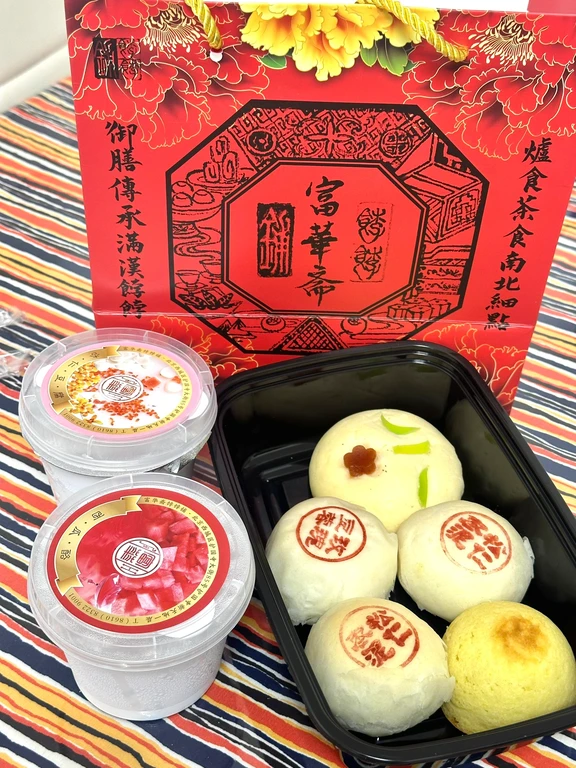
- Eat it there
- The pastries are at their best straight from the oven. Once they cool at home they lose a great deal, so they do not travel well as a gift.
- Seasonal items
- Watermelon jelly runs June to August only, and wisteria cake is made in limited quantities from mid-April to early May while the flowers last. Call ahead to ask whether what you want is on.
- Waiting
- The Huguosi shop is small — five or six tables — so weekends and holidays can mean a wait. Go off-peak.
- Tea
- Order a pot of jasmine snow bud or sanqing tea with the pastries. Both suit them better than sour plum drink.