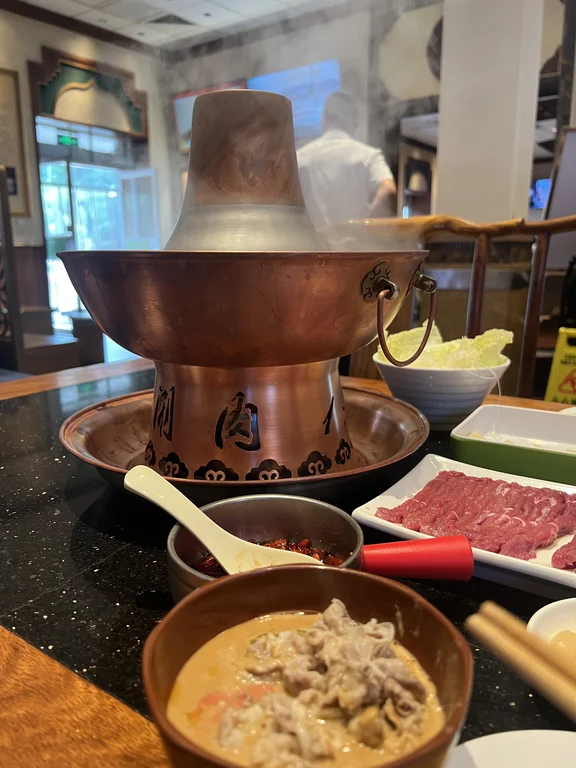
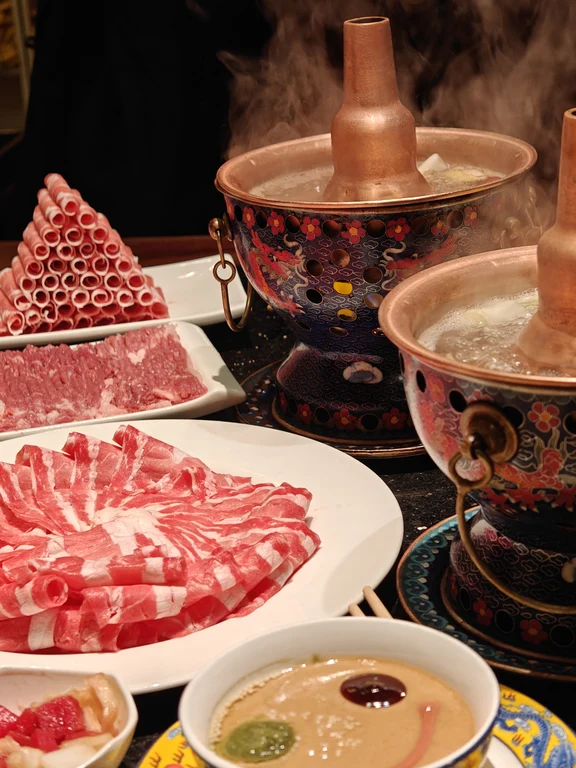
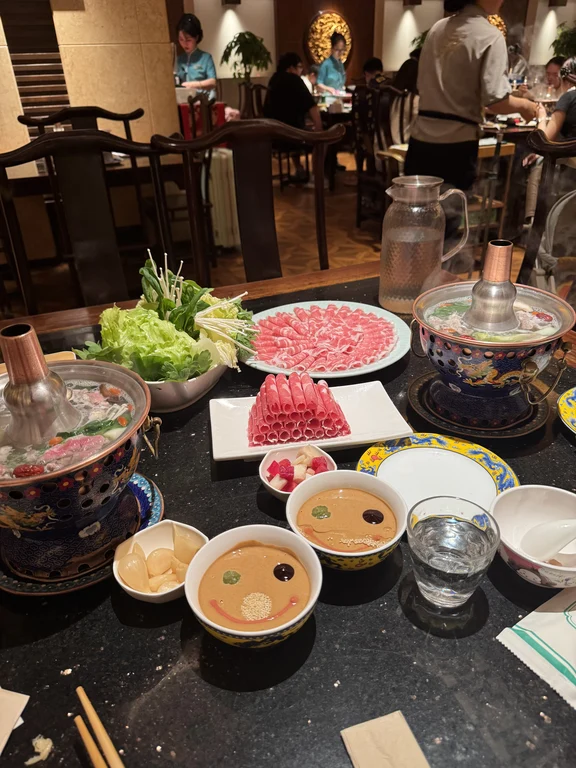
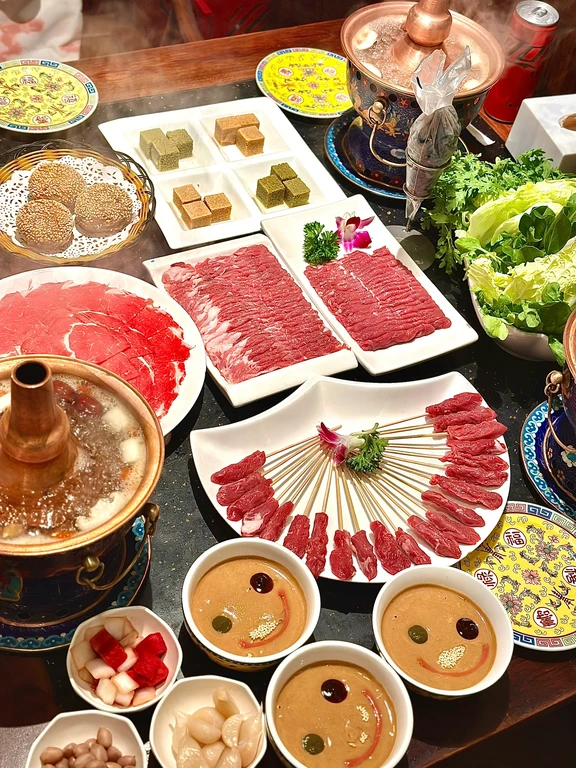
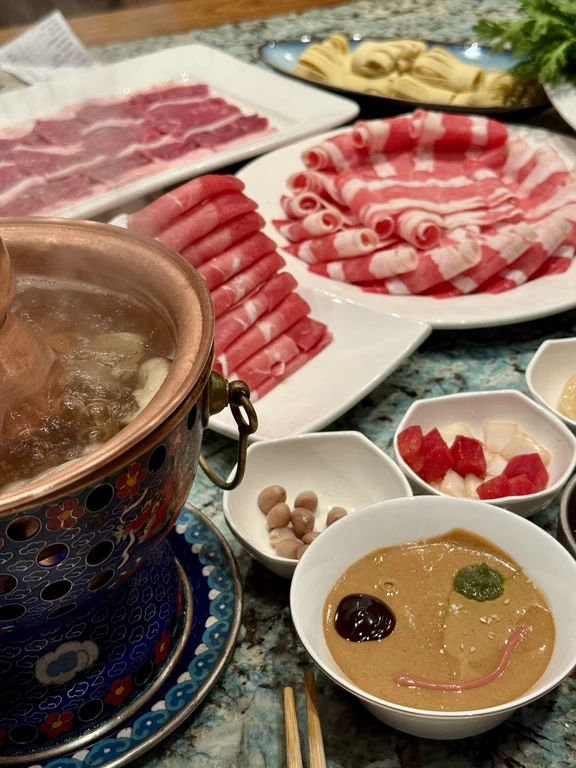
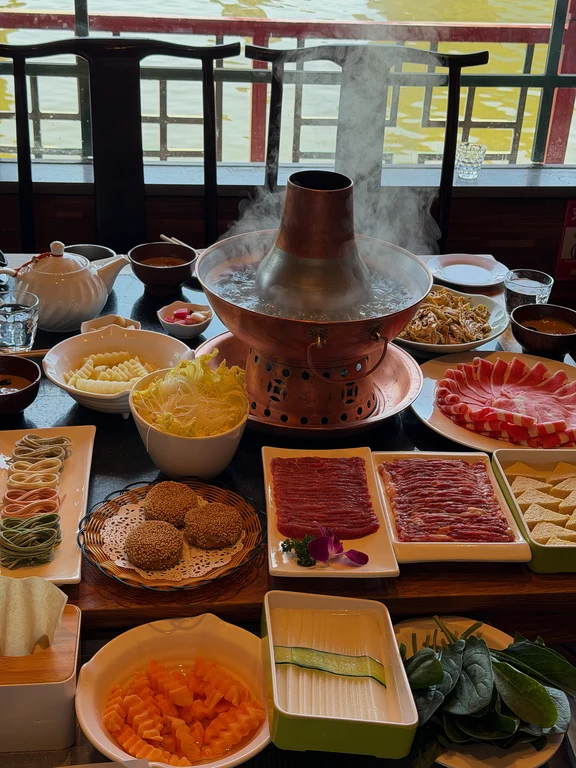
Nanmen, formerly Hongyuan, is a traditional halal mutton hotpot house founded in 1994 and named for its first branch by the south gate of the Temple of Heaven. It is known for a charcoal copper pot, a clear broth and hand-cut lamb, and for a sesame dip that people come back for. It is one of the standard places to understand what Beijing hotpot actually is.
- Nanmen (Tiantan south gate)
- The original, at 13-1-2 Yongdingmen Dongjie Dongli in Dongcheng, just by the park's south gate. Plain, unpretentious room, very good value, and a serious queue on public holidays.
- Nanmen (Dongdan)
- Third floor of the News Building, 26 Jianguomennei Dajie. Nicer room and attentive service, so it suits a family meal or a business dinner.
- Nanmen (Guomao)
- In the Guomao business district in Chaoyang. Serves single-person small pots, which suits office workers or anyone eating alone.
- Nanmen (Beiwalu)
- 28 Beiwalu in Haidian. Local residents eat here and there is usually no queue on weekdays.
- Nanmen (Tongzhou)
- Beside the Grand Canal. Pleasant setting, fewer people, and some seats are on a boat.
What to order
- Fresh-cut yuanbao lamb
- The signature of signatures: fresh lamb, an even ratio of fat to lean, tender and rich with lamb flavour the moment it hits your mouth.
- Hand-cut lamb shoulder
- Marbled like stone, sliced with real skill to an even thickness. After a quick dip it turns creamy and stays tender rather than going tough.
- Fresh tripe
- Ten seconds in the pot, lifted and dipped seven or eight times. Springy and crisp, and best when it comes out coated in sesame paste.
- Sesame-paste shaobing
- A flaky baked flatbread, crisp outside and soft inside, good on its own and better with lamb folded into it.
- Qianlong cabbage
- Cabbage in a thick, slightly sweet sesame dressing. The best vegetable to cut the richness, and a favourite of anyone who likes the paste.
- Crown daisy stems
- Not chrysanthemum greens. It tastes faintly sweet and snaps when you bite it, and it cleans the palate well with the paste.
The dip and the pot
- House sesame paste
- The reason the shop exists. Salty, deeply savoury, thickened to just the right consistency, with fermented bean curd, chive flower and shrimp oil in a balance that works. It arrives with a 福 written in bean-curd liquid on top, and refills are free.
- Fresh chili oil
- Five yuan a portion, very fragrant. Stir it into the paste if you want heat and another layer of flavour.
- Clear broth
- The old Beijing base: plain water in a copper pot. It does not foam up over a long meal and it leaves the lamb tasting of itself. Two or more people order the large pot (about 12 yuan); one person orders the small (about 10 yuan).
Queues and how to order
- Avoid the peak
- The Tiantan branch on a public holiday is grim — numbers have run past 400. Go on a weekday, or turn up between 14:30 and 16:00, which is the quietest stretch.
- Phone for a number
- Some branches — Dongdan and Tiantan Dongli among them — will take a number for you over the phone. You give the last digits of your mobile and go when it is nearly your turn, which can save more than an hour. The original branch usually only issues numbers on site and has no online queue.
- A menu that is not on the menu
- Ask whether the 20-yuan pot set is available — it comes with glass noodles, baby cabbage and frozen tofu, and it is often not printed on the menu.
What to watch for
- Check the sign
- There are many shops called Nanmen in Beijing. The real ones carry 宏源 (Hongyuan) and 清真 (halal) on the sign. Names with extra words added before, after or in the middle — 南门铜锅涮肉, for instance — may be imitations.
- On the lamb smell
- Old Beijing halal hotpot is about the taste of the lamb itself. If you cannot take even a hint of mutton smell, think twice, or lean harder on the sesame paste and chili oil.
- Sweet garlic
- The pickled sweet garlic is excellent and cuts the fat better than anything else on the table. The first dish usually comes free; a second is charged, about three yuan.