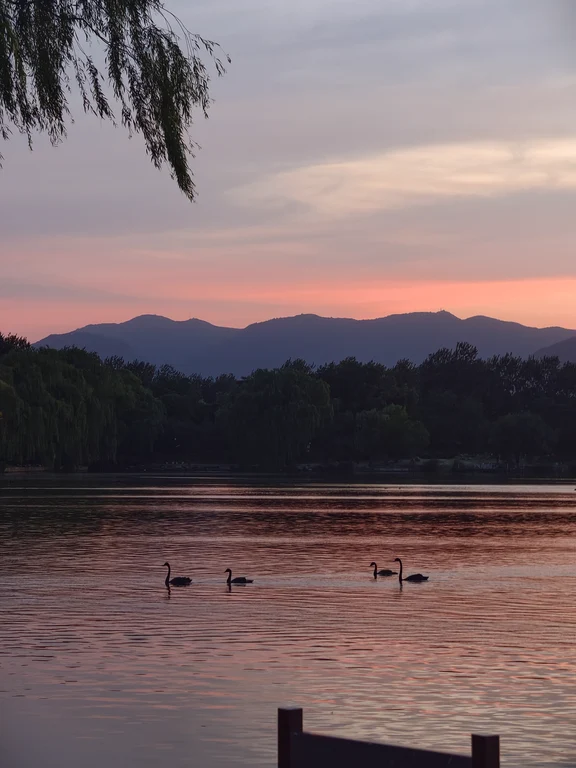
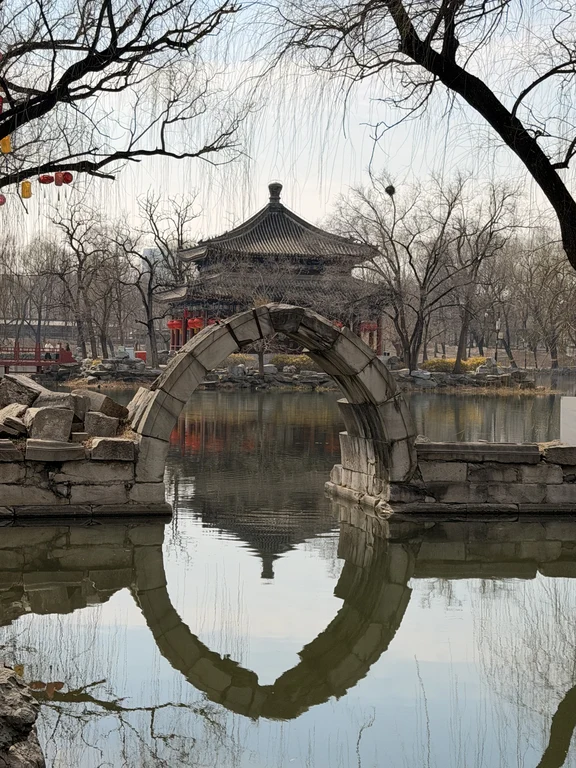
Yuanmingyuan, in Haidian, was the great Qing imperial garden: three gardens — Yuanming, Changchun and Qichun — across about 350 hectares, once called the garden of all gardens. After British and French troops burned it in 1860 it opened as a ruin park. It is a historical document and a landscape at the same time.
The basics
- Location
- 28 Qinghua West Road, Haidian.
- History
- Begun in 1707 under the Kangxi emperor and built over more than 150 years by five reigns. Burned by British and French forces in 1860. It is now a national key heritage site and a 5A-rated scenic area.
- What it is now
- It brought together Jiangnan garden design, northern landscape and Western architecture, and once held a great collection. Today it is ruins to walk among and water to look at.
What to actually look at
- The Western-style palaces (西洋楼遗址)
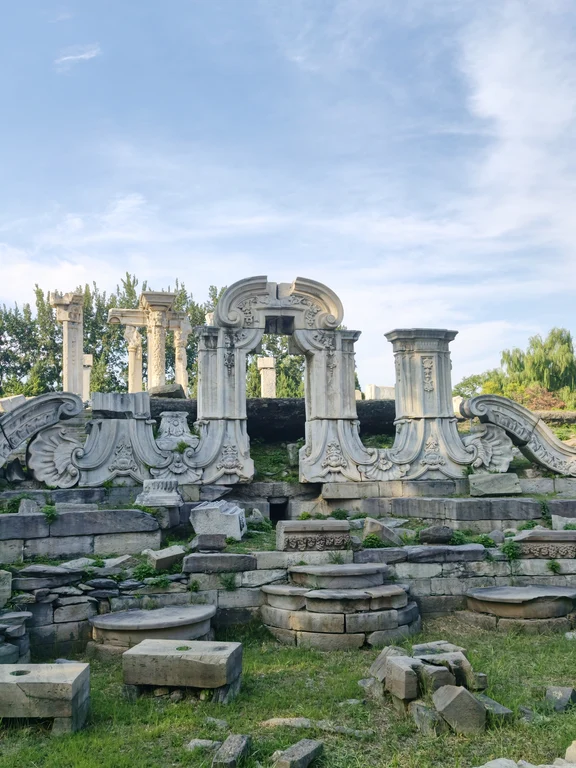
- The core of the visit: the Great Fountain ruins, the water-viewing terrace, the Hall of Calm Seas and the European maze. The broken arch of the Great Fountain is the image from the school textbooks; the Hall of Calm Seas is where the twelve zodiac heads stood; the maze is European in plan.
- Zhengjue Temple (the Yuanmingyuan museum)
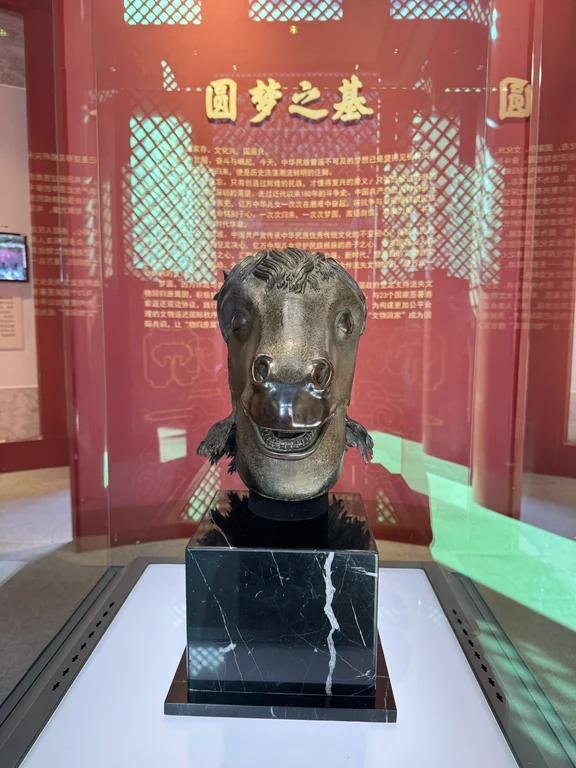
- The only intact Qing timber building left in the garden, now showing the original bronze horse head from the zodiac fountain. Closed Mondays, and it needs a free booking on the mini-program.
- The scale model (全景沙盘)
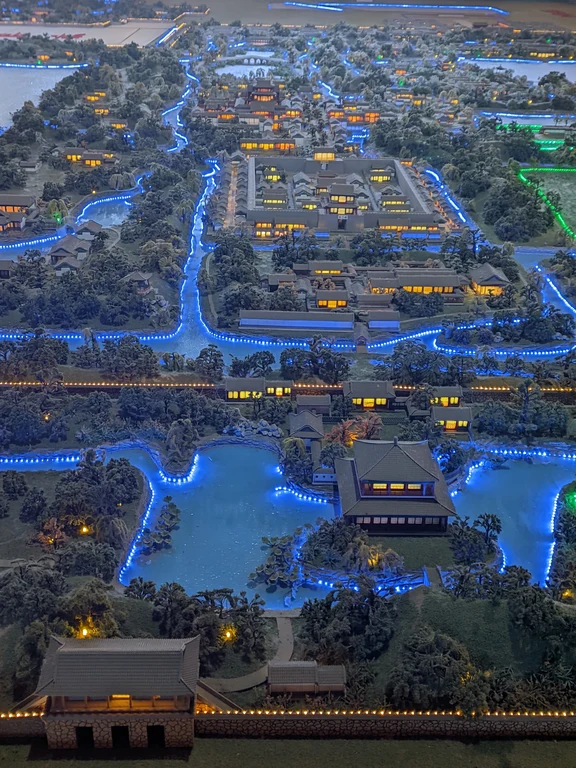
- A 1:150 model of the garden at its height. See the model first and the ruins second — the comparison is the point of the visit.
- Fu Hai (福海)
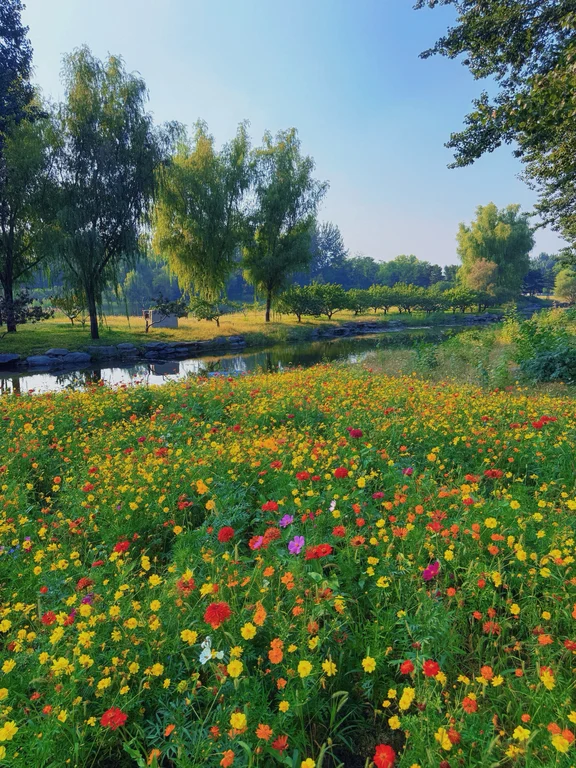
- The widest water in the park, with three small islands standing in for the isles of the immortals. In autumn the reeds turn and it is the place for a walk, a sunset or a boat.
- Qichun Garden (绮春园)
- Once the empress dowager's own garden, known for small, careful water scenes. Quiet water, and the Pingxiang pavilion area is the autumn photograph.
Routes through it
- Three hours, the essentials (east gate in, south gate out)
- In at the east gate, the scale model, the Western ruins — Great Fountain, Hall of Calm Seas, maze — then Fu Hai, out at the south gate. No doubling back, and it works with children or a short afternoon.
- A day for the history (south gate in, east gate out)
- In at the south gate, Zhengjue Temple for the horse head, then by boat or on foot to the Western ruins, Fu Hai, out at the east gate. For visitors who came for the history rather than the walk.
- The low-effort version
- In at the east gate, the ruins, then the park boat (40 yuan) down to near the south gate and out. For anyone who would rather not walk the whole thing.
Tickets and hours
- Tickets
- Buy the 25-yuan combined ticket: park, Western ruins, scale model and Zhengjue Temple. The 10-yuan park ticket does not get you into the ruins.
- Booking
- Book ahead on the Yuanmingyuan Ruins Park WeChat account and scan your ID card at the gate. Zhengjue Temple is a separate booking on the mini-program.
- Opening hours
- Peak season, 1 April to 31 October, 7:00 to 21:00, last entry 19:00. Low season, 1 November to 31 March, 7:00 to 19:30, last entry 18:00.
Getting there
- South gate
- Line 4 to Yuanmingyuan, Exit B, three minutes on foot. Taxis are easy around here.
- East gate
- No metro: take a taxi or a bus to the Yuanmingyuan East Gate stop. This is the closest gate to the Western ruins.
- West gate
- Walkable from Line 16 Xiyuan. Quiet and uncrowded, good for a walk around the water, but a long way from the main sights.
What is worth knowing
- Wear walking shoes
- The park is very large and even a quick pass takes two to three hours. Travel light.
- Rides inside
- A sightseeing bus (20 yuan) or a boat (40 yuan) saves the legs. The bus does not stop in between; the boat gives you the lake.
- The AR reconstruction
- Download the Digital Yuanmingyuan or Yuanmingyuan VR app and point it at the ruins: the garden as it was appears over the stone. Seeing the two in the same frame is the strongest moment of the visit.
- What is nearby
- Tsinghua's west gate is opposite the south gate and Peking University is near the east gate. With time, pair them — campus entry needs a booking in advance.
- Autumn
- Mid to late October is the best of the ash trees and ginkgos, and the Pingxiang pavilion and the shore of Fu Hai are the autumn photographs.