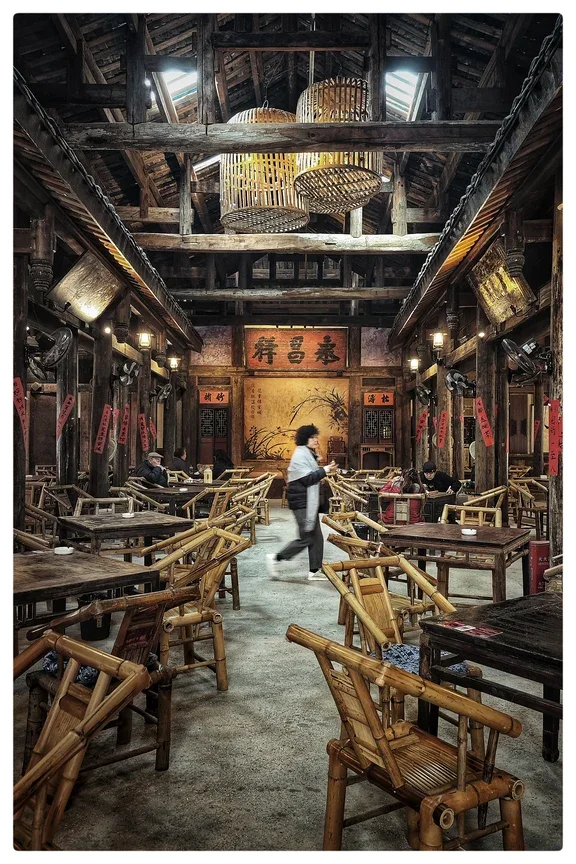
Chengdu teahouse culture includes conversation on bamboo chairs, ear cleaning, folk performance and unstructured time as much as tea. We recommend seven distinct settings, gathered here without repeating the longer Kuanzhai or Chunxi Road walks.
Old neighbourhood institutions
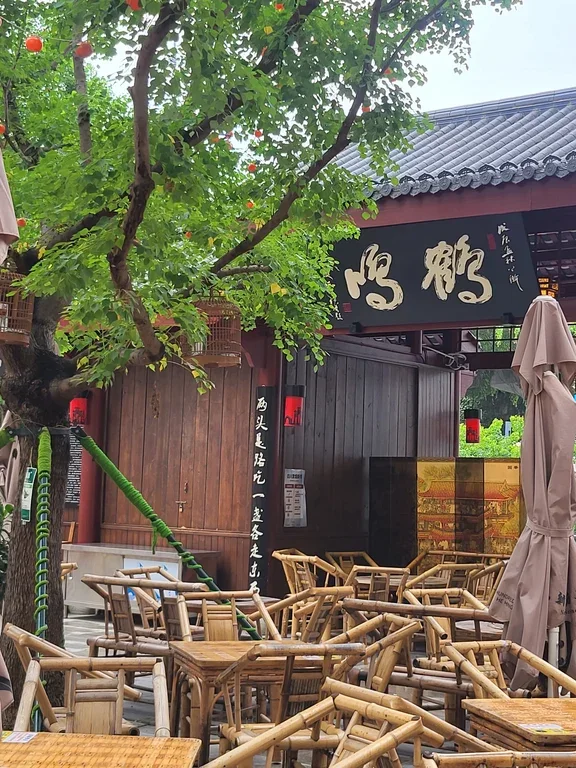
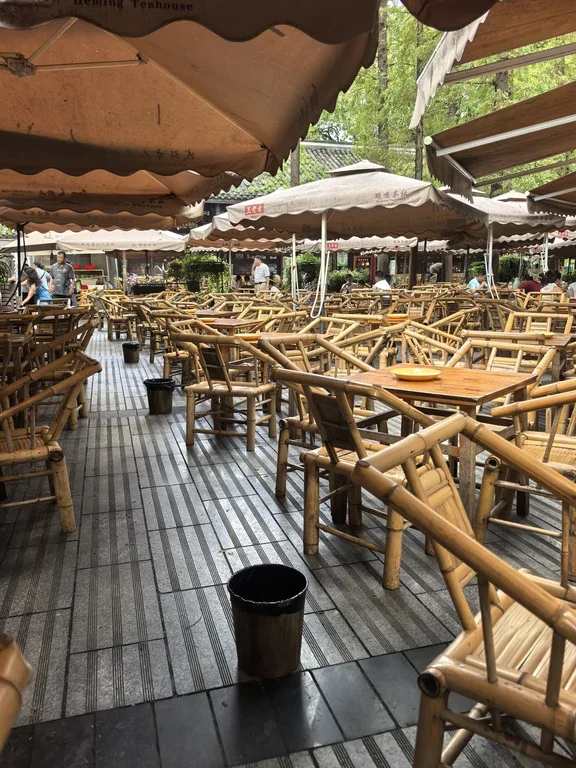
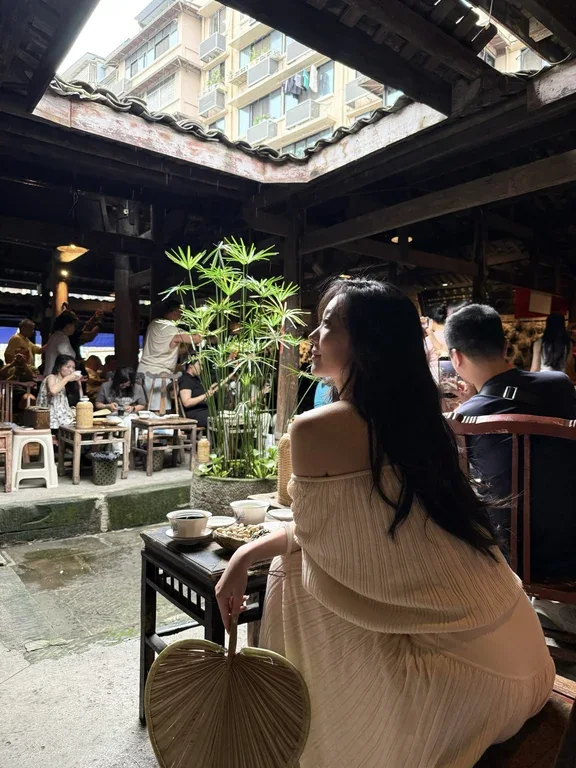
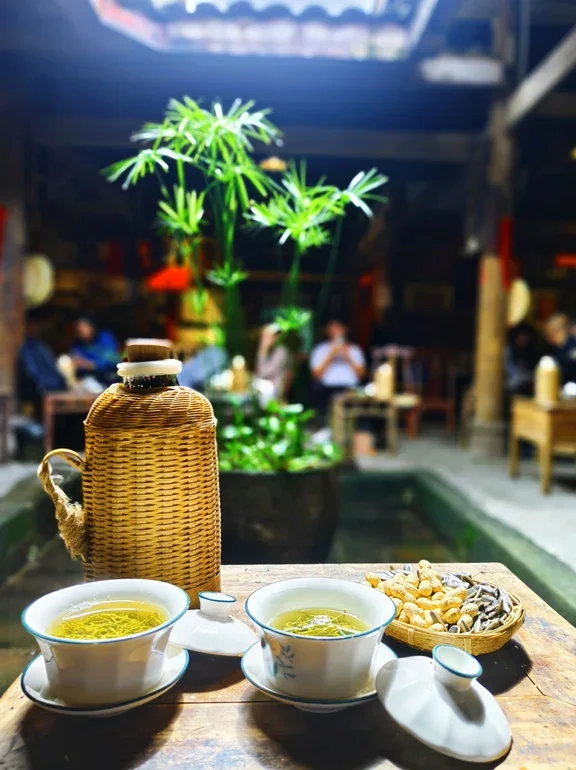
- Heming Teahouse · People's Park
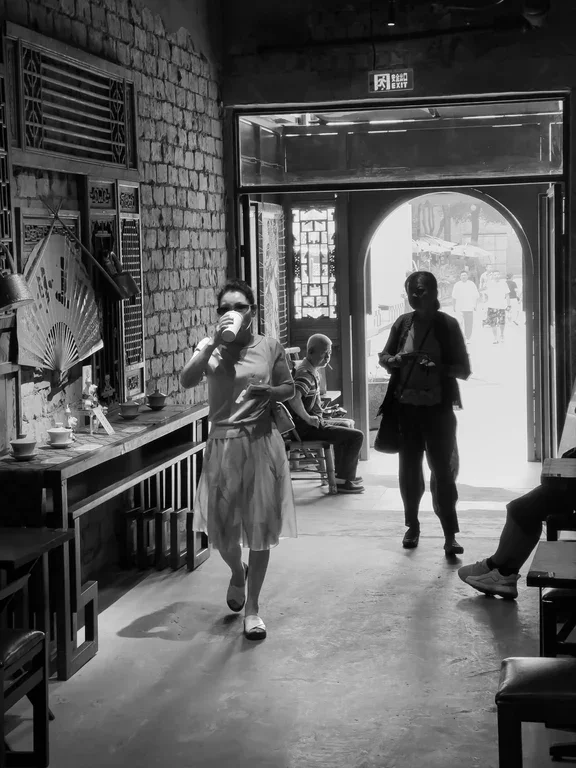
- In People's Park, described as a classic, lively Chengdu teahouse with bamboo chairs, gaiwan tea and ear cleaning.
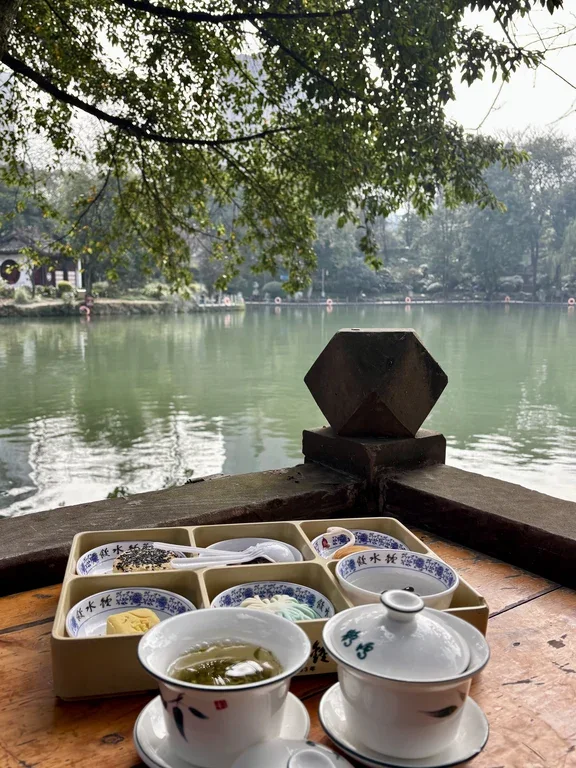
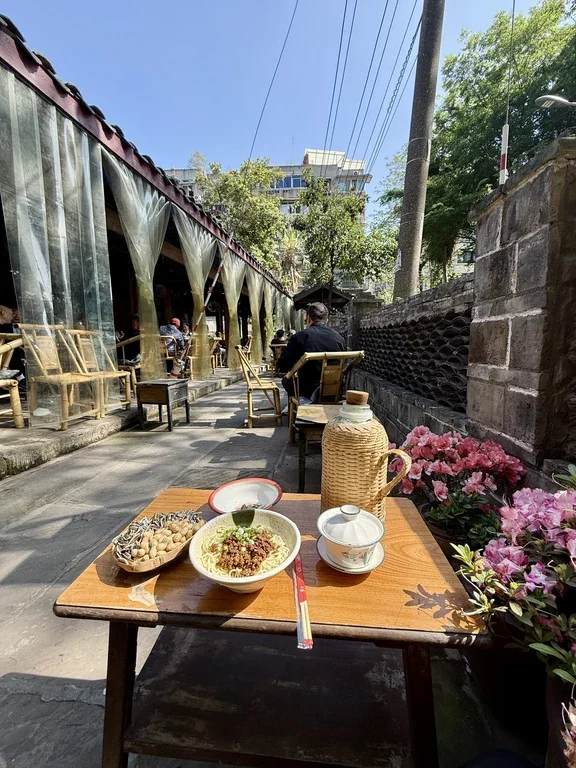
- Jinqin Old Teahouse · Fuqin
- In an old house in the Fuqin lanes, with gaiwan tea quoted at CNY 10–20 and free afternoon folk performances.
Industrial spaces and heritage performance
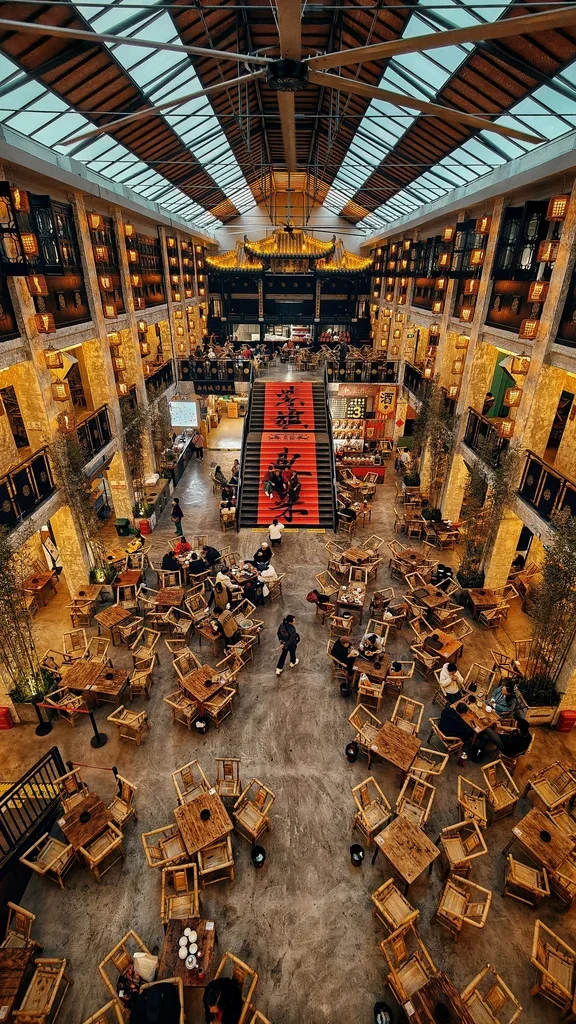
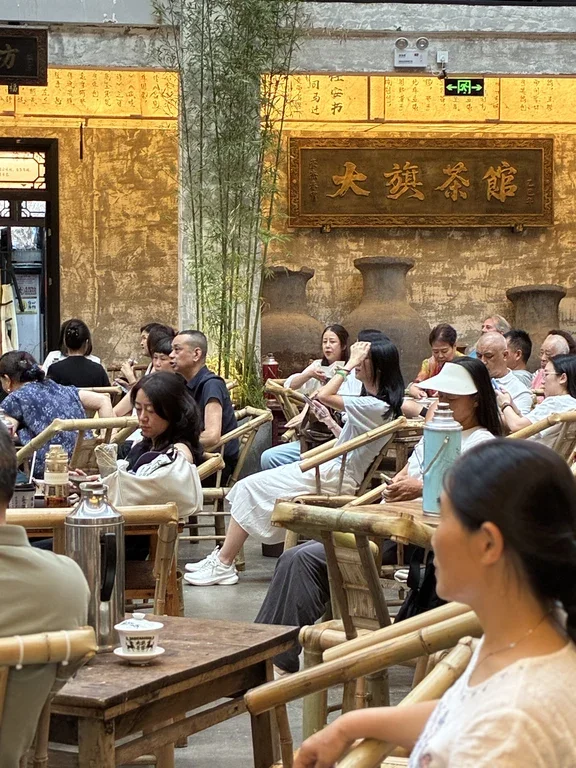
- Daqi Teahouse
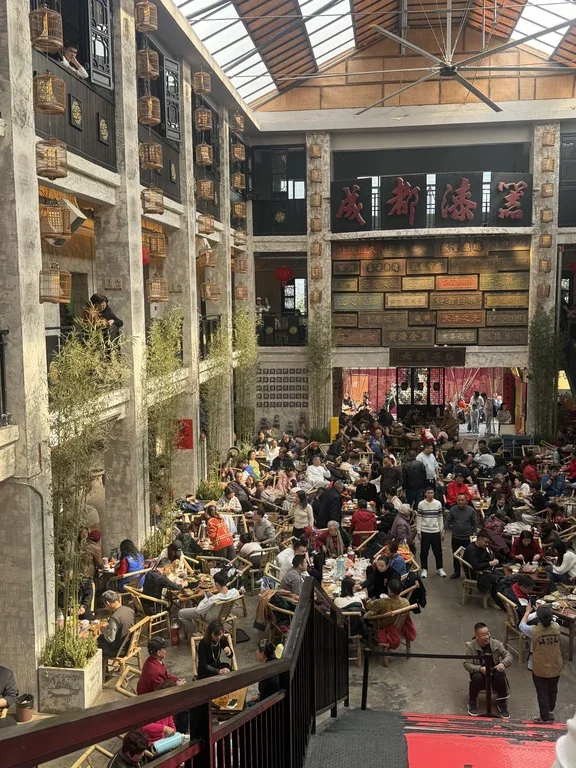
- Converted from an old lacquerware factory, with a high dome and bamboo lanterns. We recommend several free daily face-changing and long-spout-teapot performances.
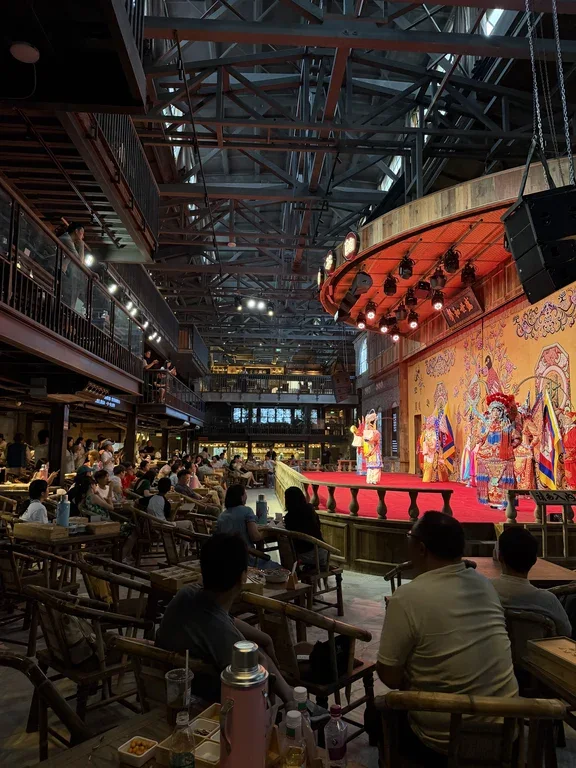
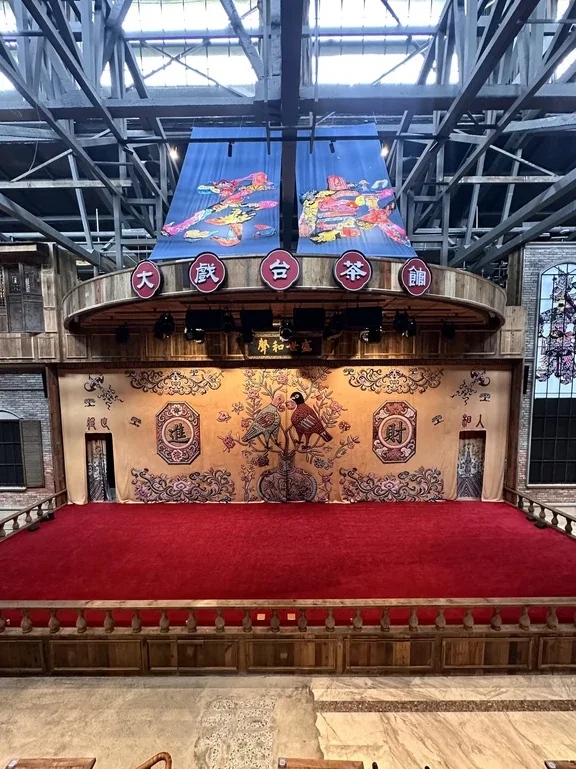
- Daxitai Teahouse · Eastern Suburb Memory
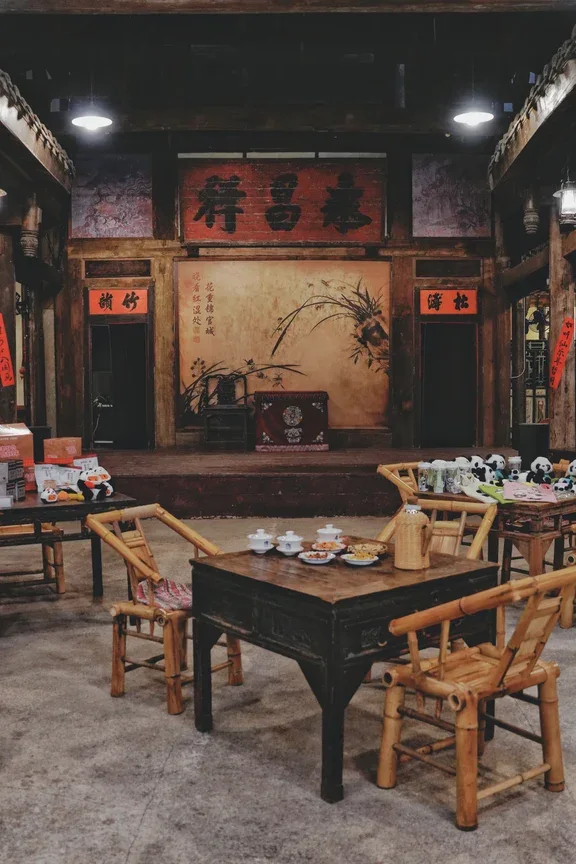
- At Eastern Suburb Memory, pairing daytime tea with evening Sichuan opera in an industrial setting with western-Sichuan details.
Temple-side courtyards and contemporary Chinese style
- Daci Teahouse · Taikoo Li
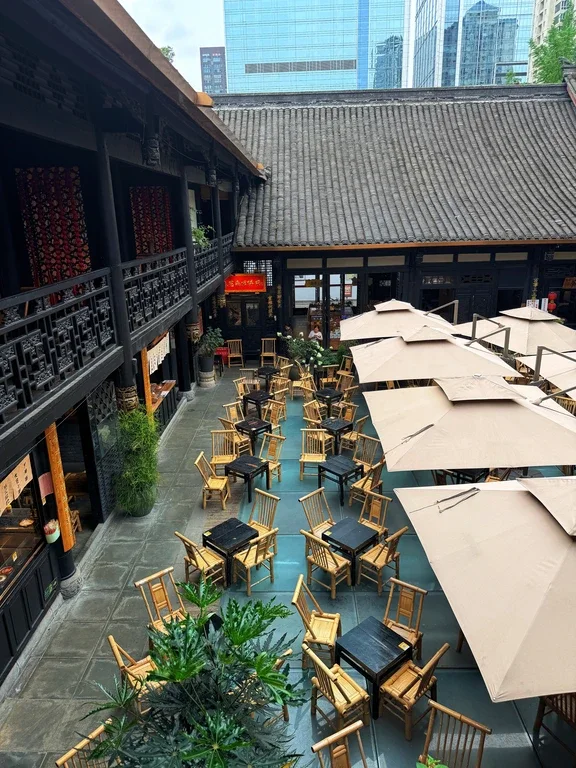
- Beside the temple at Taikoo Li, with dark timber windows, covered corridors and views contrasting temple roofs with modern towers.
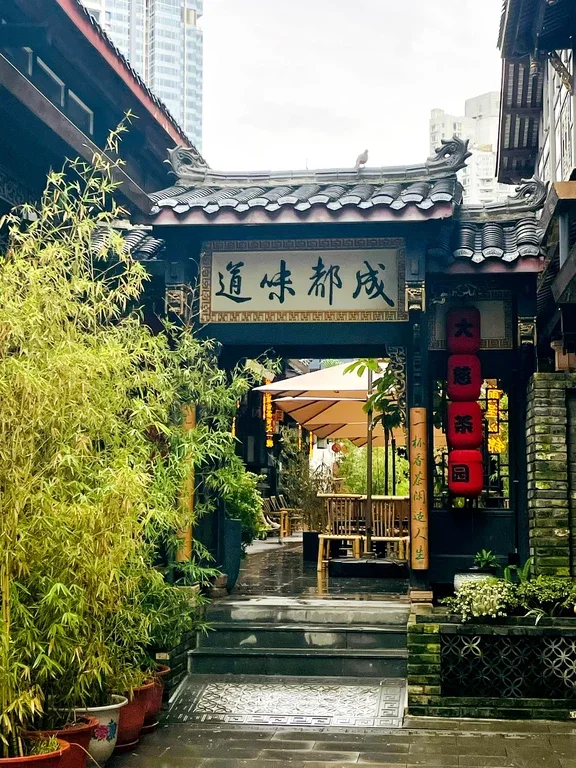
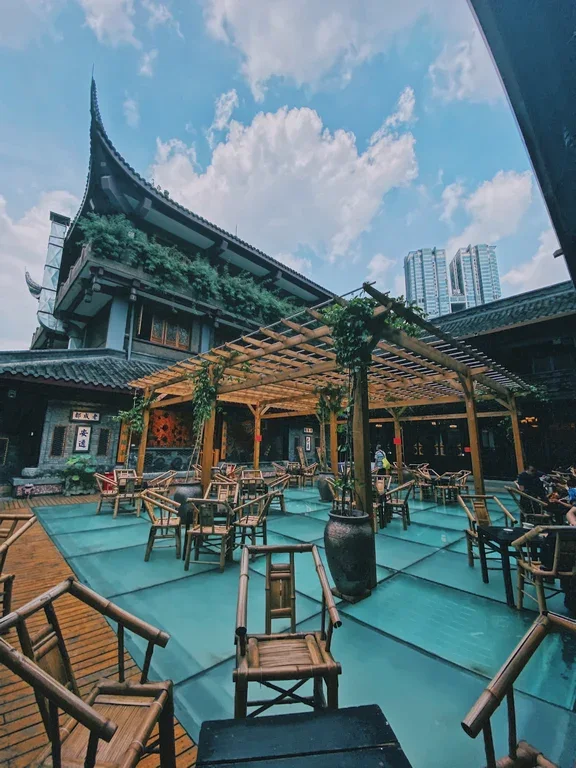
- Jingguanyi Old Teahouse
- A western-Sichuan courtyard with grey brick, timber and an old stove. We recommend half-price morning tea from 09:00–11:00 and free afternoon storytelling or jinqianban; verify the day's programme.
A teahouse in a greener setting
- Wanshui Qianshan Teahouse · Dujiangyan
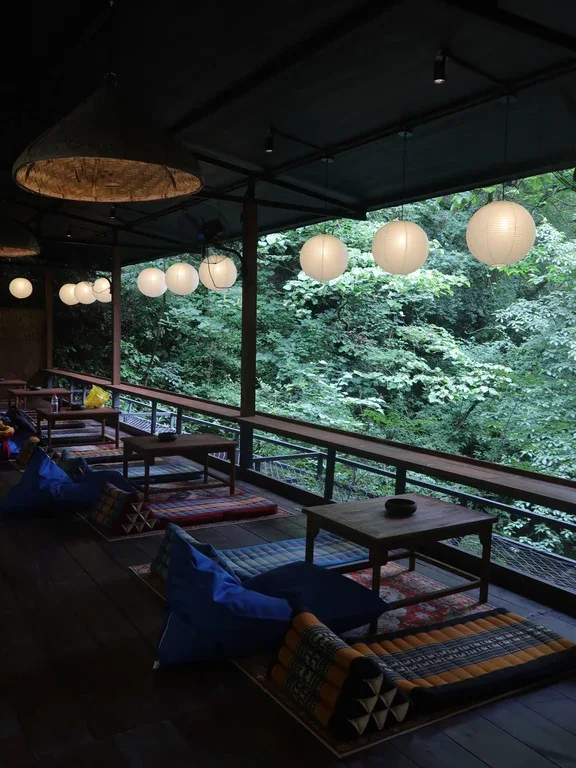
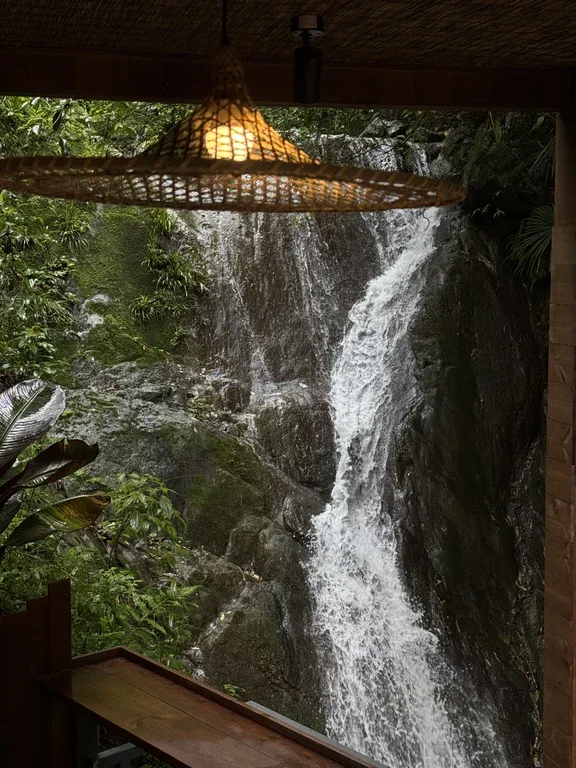
- Near Dujiangyan, with greenery and a nearby waterfall; admission includes tea and refreshments. This is outside central Chengdu, not a casual extra stop.
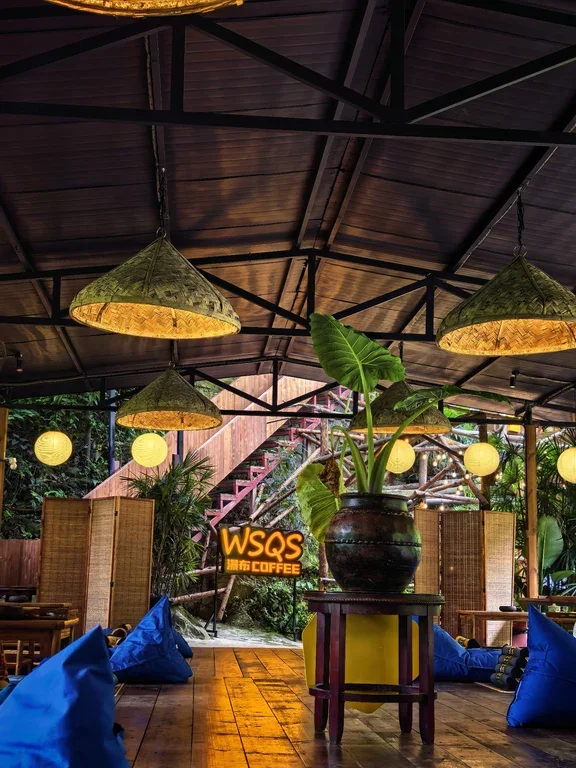
Four teahouse rituals
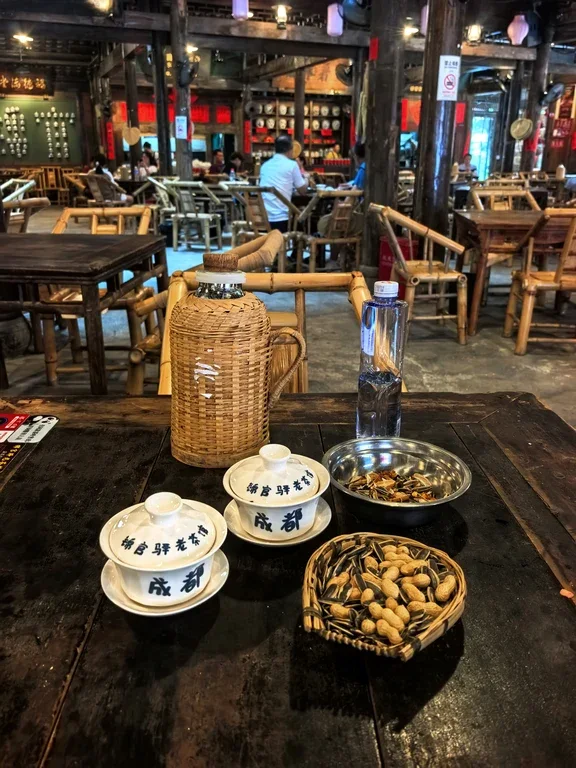
- Order gaiwan tea
- Try sanhua tea or huamaofeng. For reference, CNY 10–20 with refills and an unhurried stay; confirm the actual table charge, refills and time expectations.
- Ear cleaning, with the price agreed
- Ear cleaning is a common optional ritual. At busy teahouses it may involve a wait; agree price and duration and check hygiene before starting, or simply decline.
- Watch a folk performance
- We recommend face-changing, tea pouring, storytelling and jinqianban at selected teahouses. Check the day's schedule and seating rather than assuming every performance is free and daily.
- Chat or do very little
- Chat with people nearby or sit quietly. The slower rhythm is an invitation, not another activity to complete.
Timing, offers and practical boundaries
- Morning offers vary
- Morning offers are available at selected teahouses, but the time windows differ by venue. Confirm the specific branch rather than applying one discount universally.
- Avoid the hottest hours
- Older teahouses may lack air conditioning and become hot at midday in summer. Morning or late afternoon is more comfortable; fans and shade matter.
- Performance times
- We recommend common afternoon slots around 14:30 or 15:00, not a universal timetable. Confirm first and arrive early for a better seat.
- Smoking and conflict
- Some indoor areas are non-smoking. Ask staff to address violations rather than starting a confrontation, and keep conversation at a considerate volume.