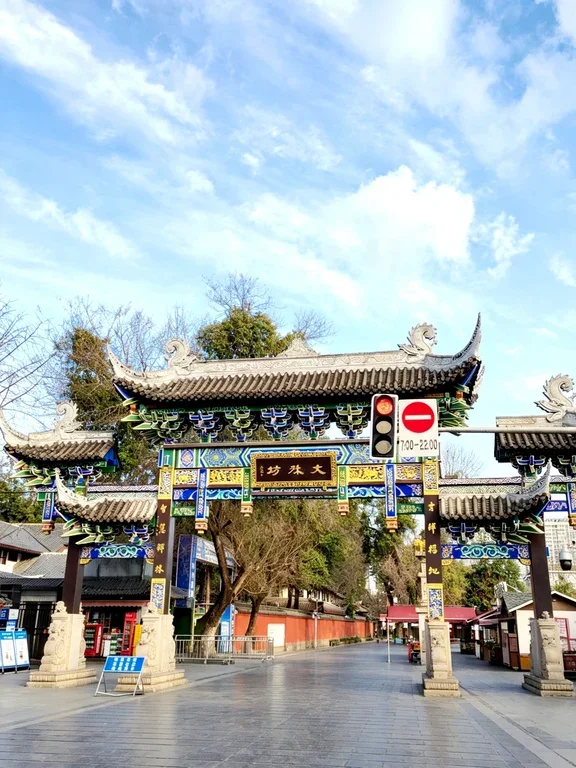
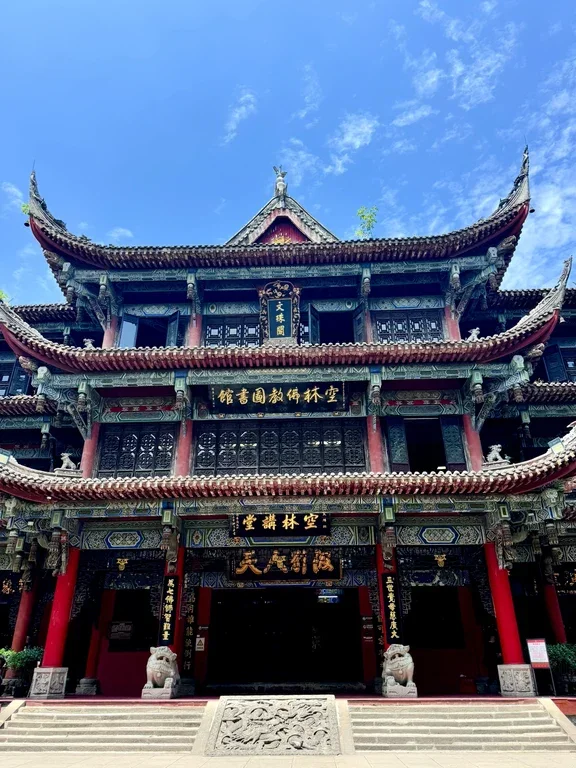
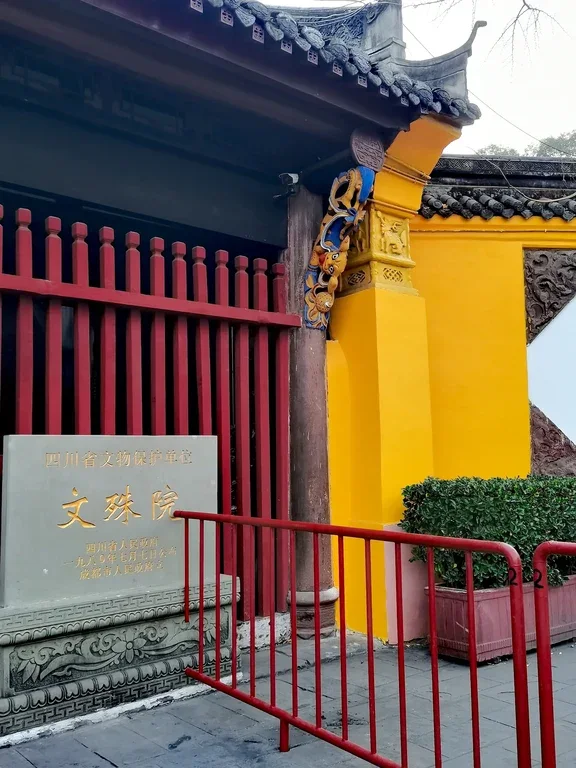
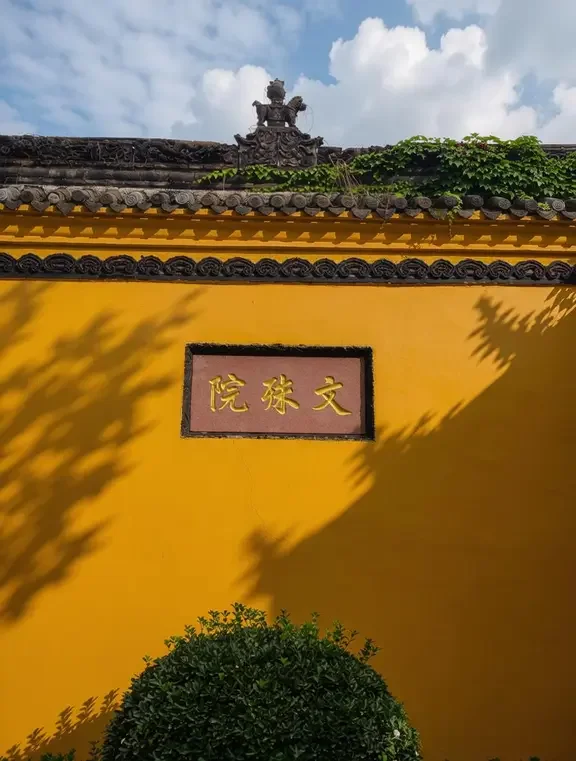
Wenshu Monastery, also called Konglin Hall, is described as a well-preserved Buddhist monastery founded in the Sui dynasty more than 1,400 years ago, and one of the major Chan monasteries in the Yangtze basin. Visitors can follow the central halls, drink tea in Xiangyuan, try vegetarian food or copy sutras. It is a religious site, not merely a historic photo backdrop.
Hours, address and arrival
- Free entry
- Entry has been free without reservation, using ID or a QR code. Follow the monastery's current entry procedure.
- Hours and address
- 66 Wenshu Monastery Street, Qingyang. For reference, 08:00–17:00, with last entry around 16:30.
- Metro
- Use Wenshu Monastery station on Line 1, Exit K, then walk about five minutes. Driving is discouraged by parking and stopping restrictions.
A considered route through the monastery
- Start at the red wall
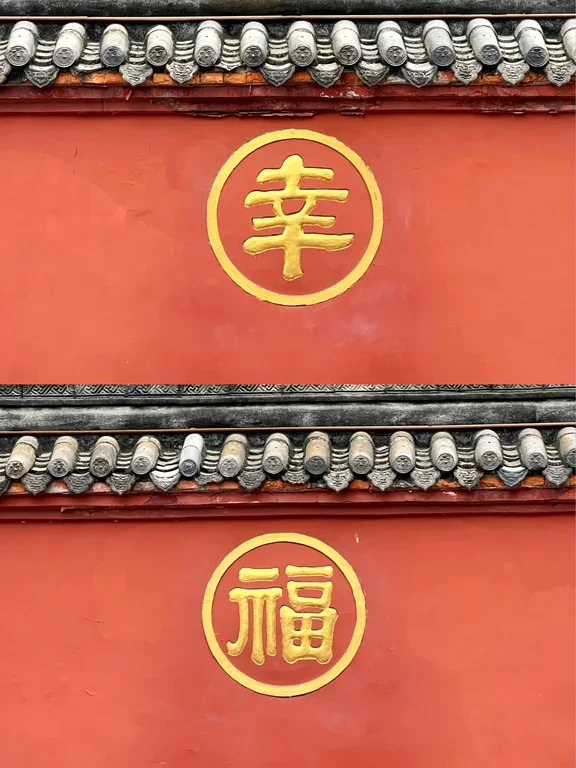
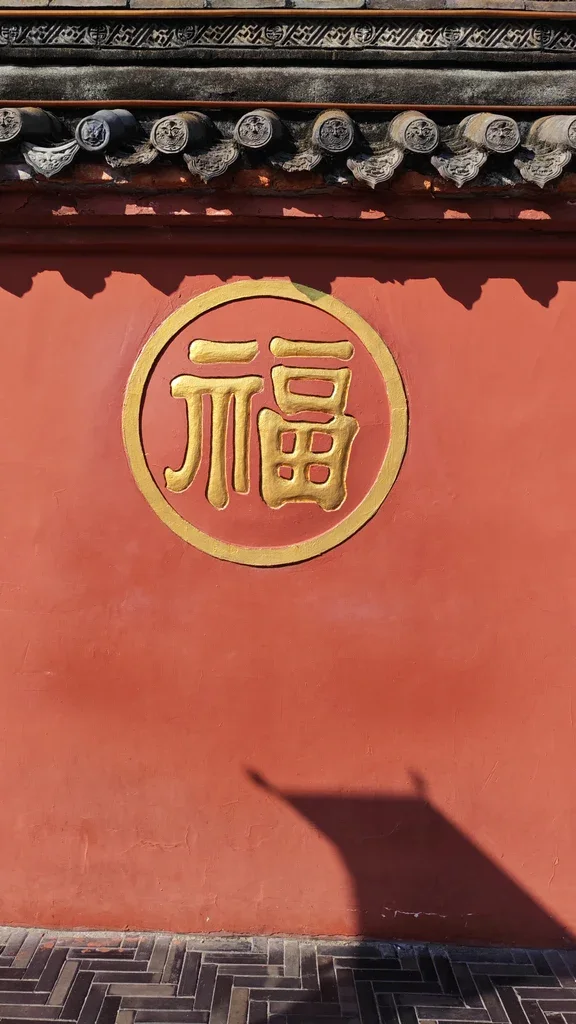
- The red wall to the left outside the gate carries gold characters wishing peace and happiness. Keep the entrance clear when photographing.
- One free incense stick
- One environmentally conscious incense stick is available free on the right after entry; outside incense is not permitted.
- Central axis
- Follow Tianwang Hall, the Hall of Three Bodhisattvas, the Main Hall, the Dharma Hall and the Sutra Library, subject to access. Do not photograph Buddha images inside.
- Tea, sutra copying and pagoda
- Drink tea or copy sutras at Xiangyuan, try vegetarian food at Fuhuiyuan, and finish by walking clockwise around the Thousand-Buddha Peace Pagoda, three times. Leave through the small rear courtyard gate to reach Wenshufang snack street opposite.
Walls, pagoda and courtyards
- Red wall and bamboo
- Grey tiles, red walls, bamboo and large characters wishing happiness and peace form our signature view. Visit around 08:00 or 16:00 for softer light, without blocking the gate.
- Thousand-Buddha Peace Pagoda
- The 11-storey iron pagoda sits among old trees, sometimes with pigeons and cats below. Do not chase or feed animals for photographs.
- Yellow gates and Xiangyuan
- Photograph the warm yellow walls and climbing plants at the main entrance, then look for the exit-gate message: ‘First, be healthy; everything else comes second.’ Xiangyuan offers pavilions, water and greenery for a quiet pause over tea.
Devotion and respectful conduct
- Different halls, different intentions
- For study and wisdom, visitors traditionally turn to Manjushri in the Hall of Three Bodhisattvas. For peace and health, they turn to Shakyamuni and the Medicine Buddha in the Main Hall, where visitors may queue to touch the ‘fortune’ character on the railing. For relationships and wellbeing, they visit Guanyin Hall. These are devotional traditions, not promised outcomes.
- Incense and thresholds
- Use the incense provided by the monastery rather than bringing outside sticks. Step over thresholds and fan incense gently rather than blowing it out.
- Photography and dress
- Dress respectfully and keep voices low. Do not photograph Buddha images inside, and ask before photographing monastics or worshippers.
- Buy only at clearly priced temple counters
- For prayer beads, sachets or souvenirs, we recommend clearly priced official temple counters rather than unsolicited fortune-telling, sales or ‘free guiding’ outside.
Vegetarian food, sutra copying and nearby snacks
- Xiangyuan and Fuhuiyuan
- We recommend vegetarian noodles and mushroom rice, with paper and brushes available when ordering tea for sutra copying. Confirm current prices, activities and meal times.
- Zhang Lao'er liangfen
- Across from the monastery, with sweet-water noodles and liangfen; the complete food entry is in the Chengdu food guide.
- Gongting pastries
- To the left after exiting, we recommend pepper-salt pastries, Napoleon slices and walnut cookies as gifts. Check queues and shelf life.
- Yan Taipo guokui
- Fresh guokui with shredded-vegetable or beef fillings, best hot; more specialists are kept in the food guide.
Allow time to slow down
- One and a half to three hours
- Allow 1.5–3 hours for the halls, tea and photographs. Even on a short visit, follow the central route and monastery etiquette.