Chongqing teahouses include lively dockside-city sociability and quieter temple settings. Six venues cover performances, affordability, nostalgia and views. Prices, performances, atmosphere and smoking policies need local confirmation.
Visitor-friendly setting and heritage performances
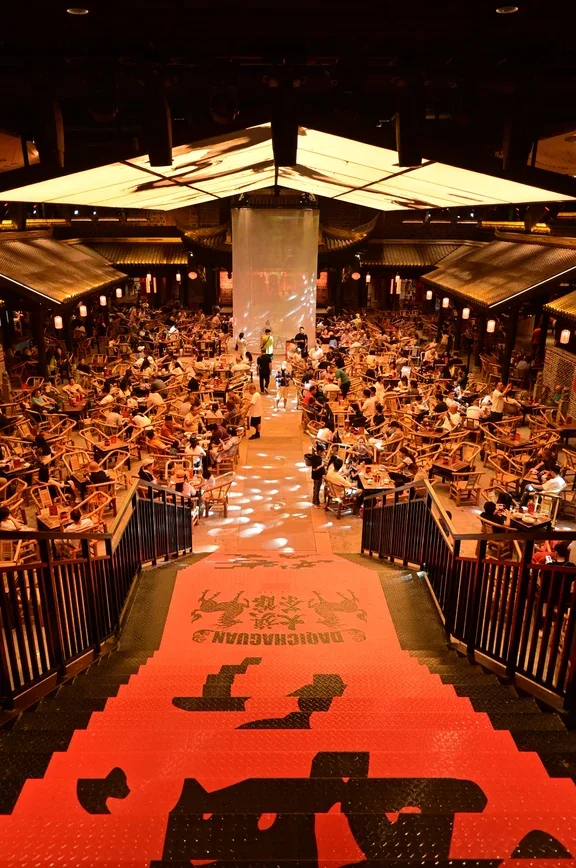
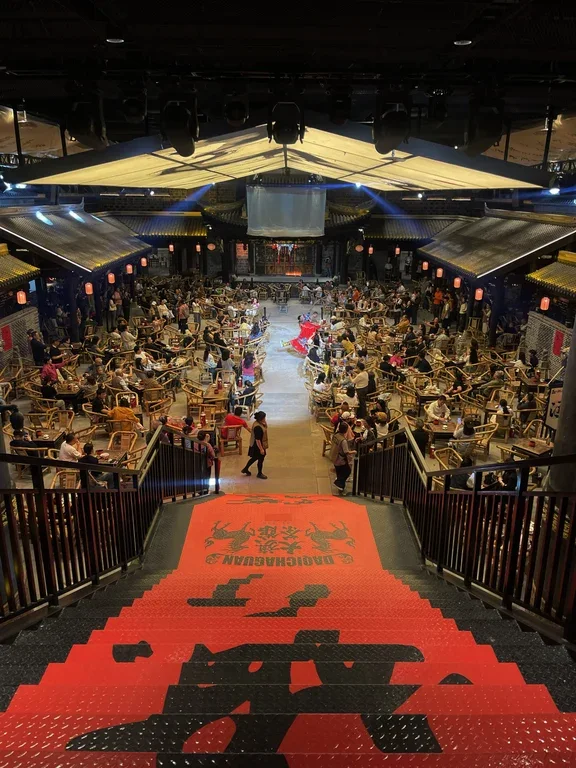
- Daqi Teahouse
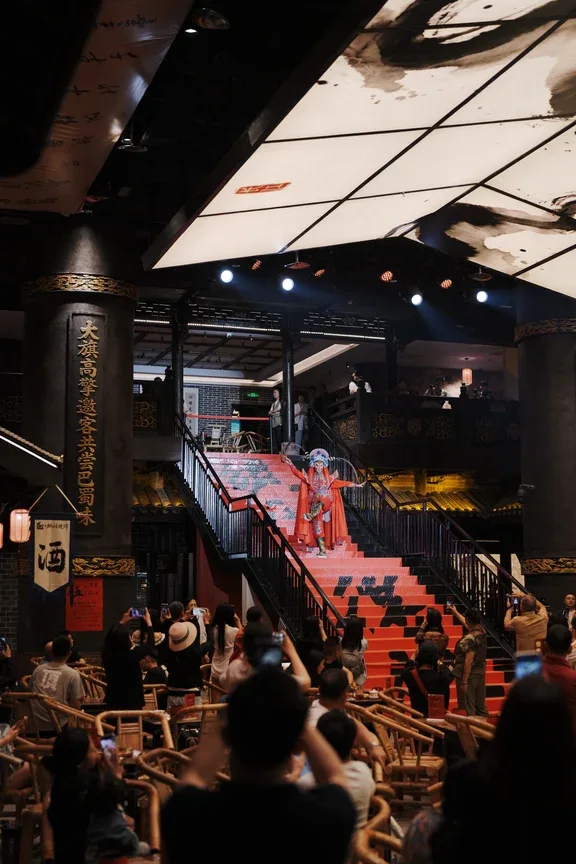
- At Chaotianmen, with a Chinese courtyard, mirrored staircase and several daily face-changing and long-spout tea performances described as free. The teahouse has air-conditioning and a family-friendly setting. Gaiwan tea starts from CNY 28, with CNY 5 morning tea before 10:00; confirm current prices and smoking rules locally. Confirm the performance schedule, whether shows remain free, morning tea and smoking rules locally.
Everyday, affordable teahouses
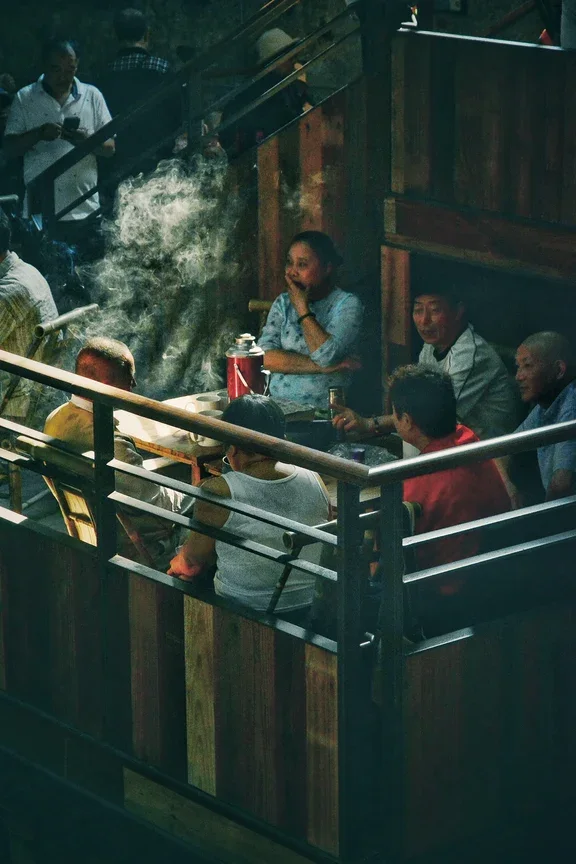
- Jiangling Teahouse
- This converted 1957 cinema has red brick and period slogans. A CNY 8 tea comes with unlimited refills for an unhurried day, alongside simple dishes and shared local food. It is noisy but full of everyday local life and popular with residents. Confirm current prices, refill rules and food service.
- Nanhu Teahouse
- Tucked into a residential part of Nan'an, this teahouse has few tourist crowds, costs around CNY 10 per person and offers dishes from CNY 3, plus qipao rental. On a rainy day, sit beside the lotus pots, listen to rain on the leaves and linger over tea. Photography and rental are extras; respect the neighbourhood.
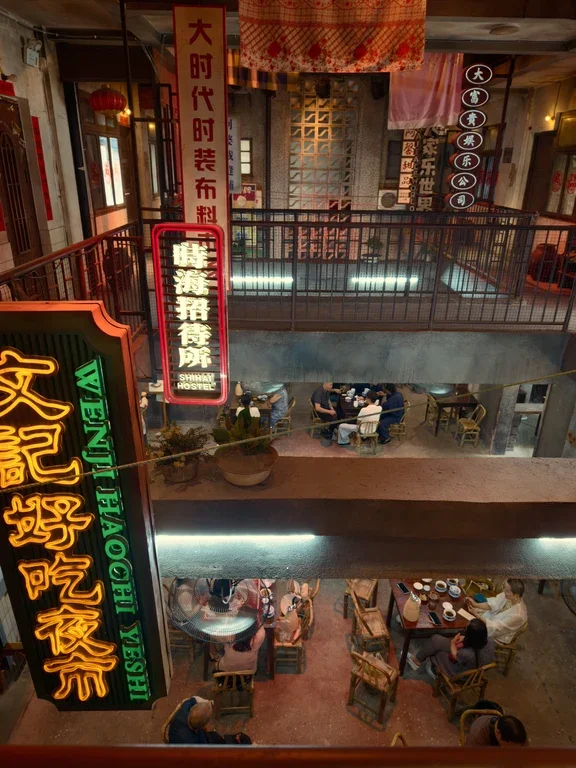
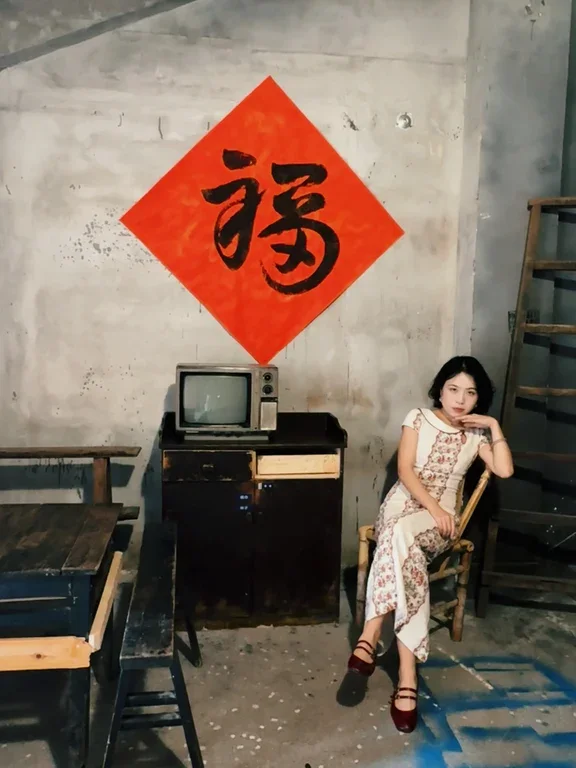
Nostalgia and artistic surroundings
- Jiaotong Teahouse
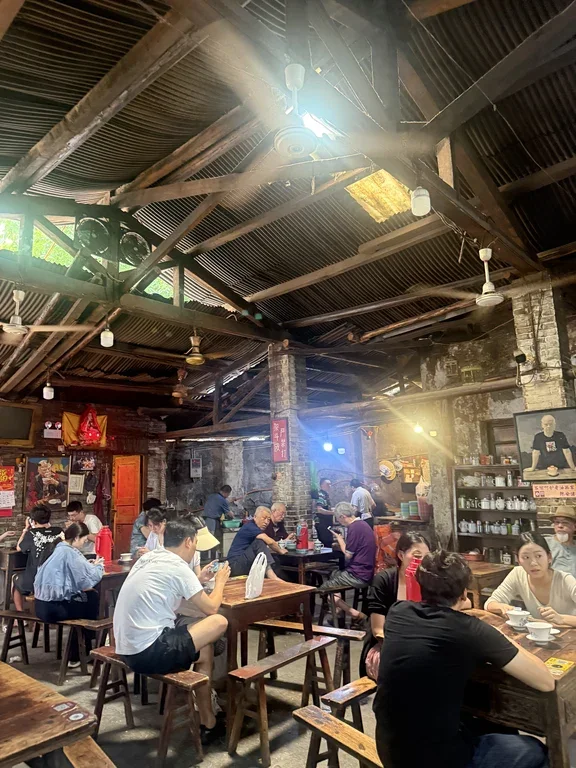
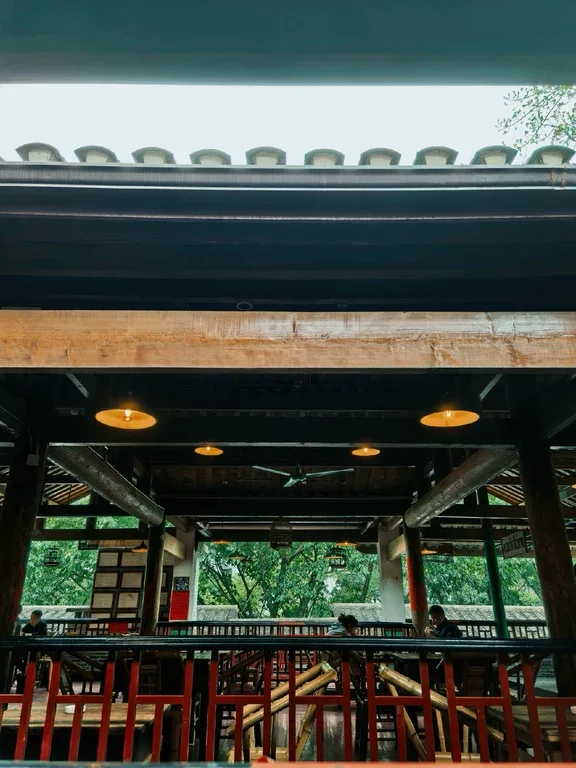
- A filming location for Crazy Stone, with brick-and-timber construction and weathered earthen walls from the 1970s and 1980s. Order a tuocha and watch regulars play chess and cards; the Sichuan Fine Arts Institute graffiti street is next door. Let everyday teahouse life take priority over photography.
- Pipashan Old Teahouse
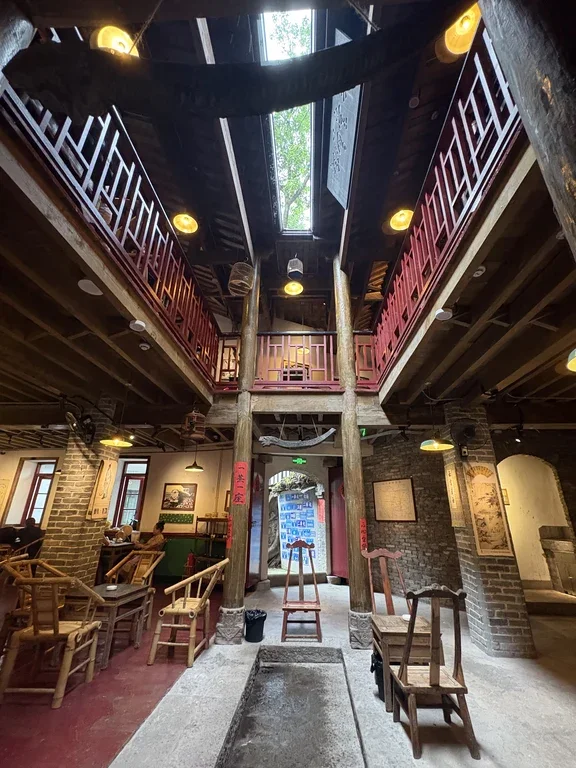
- This converted Chengdu–Chongqing railway office has railway details, costs around CNY 8 per person and sits near Jiefangbei and Pipashan Park. Confirm current prices and opening.
A quieter hillside temple stop
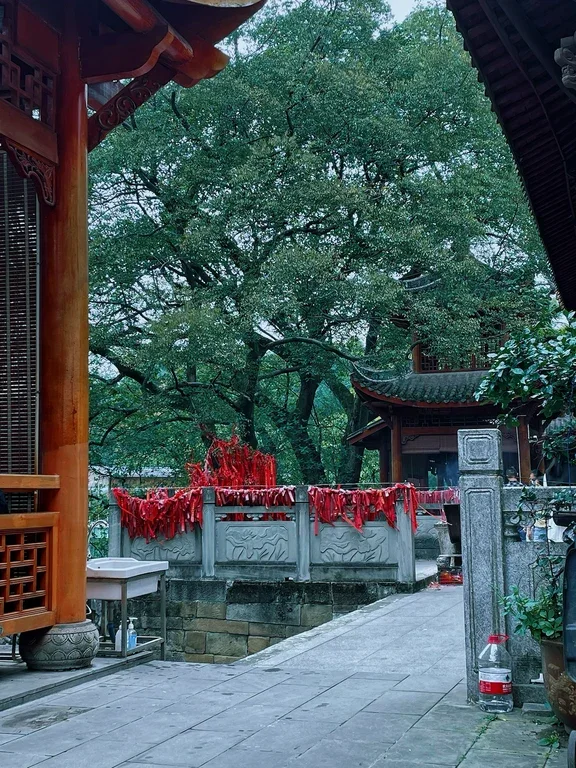
- Tushan Temple
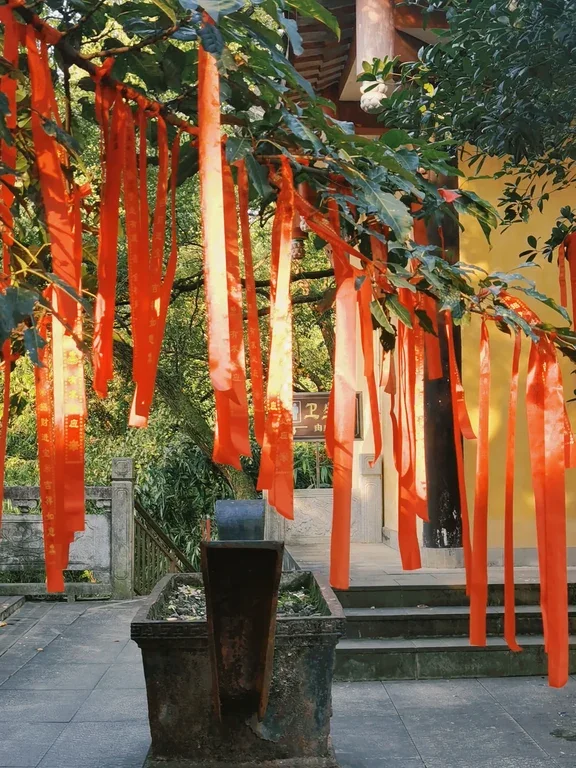
- On Nanshan, for reference, CNY 5 admission and CNY 5 gaiwan tea, with city views over tea, fresh hillside air and a vegetarian lunch at midday for those seeking quiet and nature. As an active religious site, dress, photography, meal arrangements and accessible areas follow temple rules rather than a teahouse-only mindset.
Tea and teahouse etiquette
- What to order
- We recommend Laoyin tea or jasmine-scented Bitan Piaoxue, with simple tuocha or chrysanthemum as everyday alternatives. Ask about ingredients and flavour; do not treat 'cooling' as a medical promise.
- Using the gaiwan
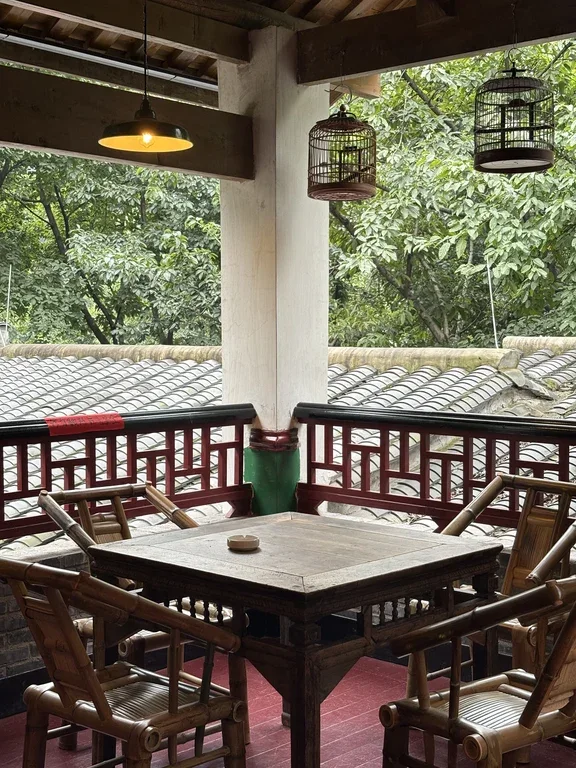
- Bamboo chairs and gaiwan bowls are part of the traditional setting. Gently move the leaves with the lid, a gesture called scraping the surface. Leave room for neighbours when settling in or asking for refills.
- Performances
- Some newer or visitor-oriented teahouses offer long-spout tea pouring and Sichuan-opera face-changing. We recommend stopping to watch the server's handling of the long-spouted pot. Check whether a performance is included, its schedule and any seating requirements.
Practical teahouse expectations
- Timing and crowds
- Expect weekend and holiday crowds at Jiaotong and Jiangling; we recommend weekday mornings or afternoons. Actual queues and available seats vary.
- Noise and smoking
- Traditional teahouses can be noisy and some may allow smoking. For a quieter setting, consider Daqi or a bomb-shelter teahouse, but check the current atmosphere and smoking policy before visiting.
- Refills and your own cup
- Many inexpensive traditional teahouses offer unlimited refills. Bring a cup for convenience and less waste, but ask whether unlimited refills and personal cups are accepted, and keep them clean.
- Respect regulars
- Keep voices down in residential teahouses and avoid interrupting cards or conversation. Ask before photographing people, especially close-ups.